The world’s literacy level has risen from 12% to 87% in the last 200 years; unfortunately, this doesn’t apply to the visually impaired. The global braille literacy level is estimated at 3.5%. In contrast, the path to literacy is their ability to read Braille.
For instance, the UK, with a literacy level of 99%, has a braille literacy rate of 4%. The discrepancy is very high, and it’s worse in developing countries.
About 1.1 billion people in the world live with some form of visual impairment, and 43 million are completely blind.
Literacy is a right for all, irrespective of the presence of impairments. Moreso, learning affects the health, lifespan, and socio-economic status of everyone, especially people who are blind.
It’s World Braille Day; read on to learn the Braille alphabet and numbers.
Also Read: 10 Effects of Discrimination That You Need to Know
What is Braille?
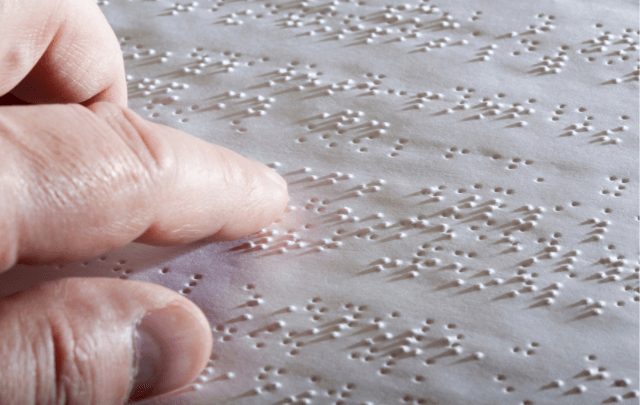
Braille is a form of written code that helps the visually impaired read and write. It’s based on a grid of small, raised dots that fit under the fingertip. Braille uses a combination of dots to represent different letters, numbers, or punctuation marks. Many languages and subjects, such as mathematics, music, and computing, can be read and written in Braille.
History of Braille
Charles Barbier, a French soldier, developed the predecessor to Braille, “night writing,” in the early 1800s. It was a code based on a system of 12 raised dots on a cell with a 2 x 6 pattern and read with the fingertips.
It was to keep soldiers safe from the enemy’s fire when they communicated at night. This way, the soldiers didn’t need lamps to read combat messages. Because of its size, it wasn’t successful, as it wasn’t possible to feel all the dots with a single touch.
At age 15, Louis Braille, a blind French boy, was inspired by Charles Barbier’s night writing. He refined and simplified the code from 12 to 6 dots so that every single letter could be read with a single touch.
In 1854, Braille was adopted in France, enabling people who were blind to learn the Braille alphabet and numbers. In 1878, the World Congress for the Blind made Braille the system of reading and writing for all blind people worldwide.
Braille Alphabets and Numbers
Braille has many versions and two grades; grade one is the basic, which is below, and grade two is more advanced.
How Braille Works
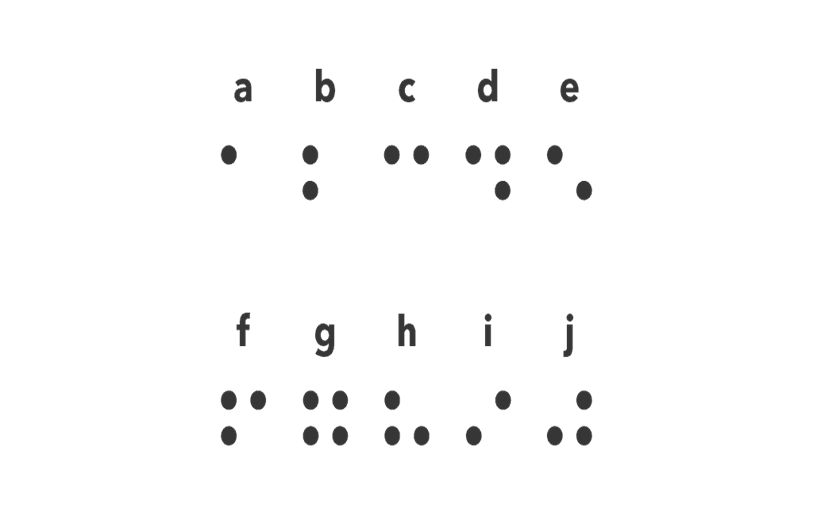
Braille is based on the first 10 alphabets (a–j) and is repeated with a few small changes for other letters, numbers, and punctuation marks.
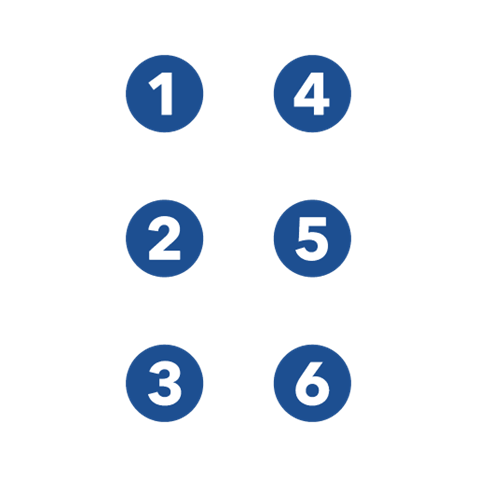
Each Braille character or cell can be read by feeling the raised dots in the cell. The Braille cell comprises six dots in two columns and three rows, and each dot is numbered 1-6.
Braille Letters a – j
This is the foundation of the Braille code. The letter “a” is dot 1, “b” is dots 1 and 2, and “c” is dots 1 and 4.

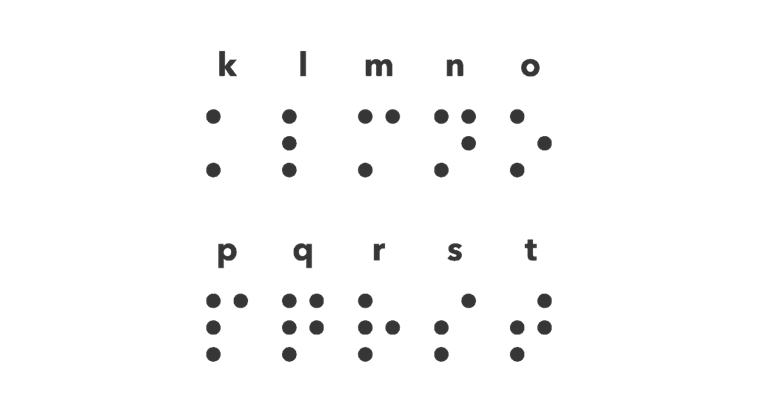
Braille Letters k – t
This set of letters follows the same pattern of a–j, with a dot 3 added to each character.
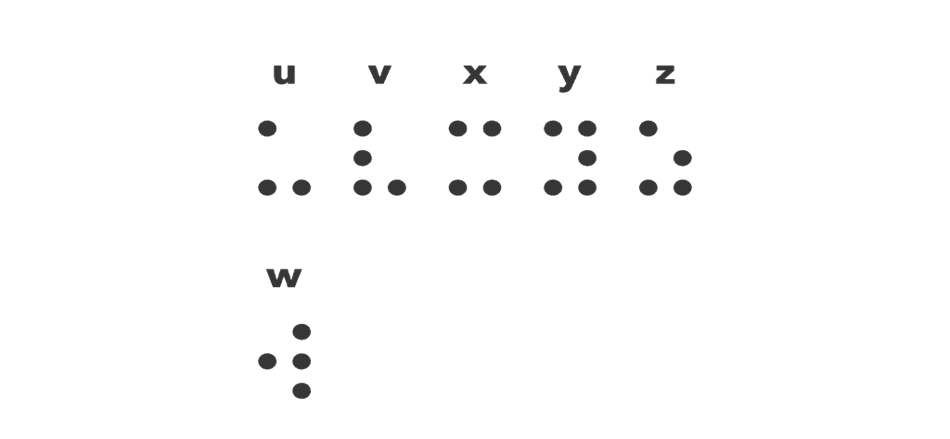
Braille Letters: u-z
The a-j pattern continues; here, dots 3 and 6 are added to each character. This rule doesn’t apply to the letter “w.” That’s because it wasn’t in use in classical French at the time Braille was invented. Dots 2, 4, 5, and 6 create the letter “w.”
Capital Letters
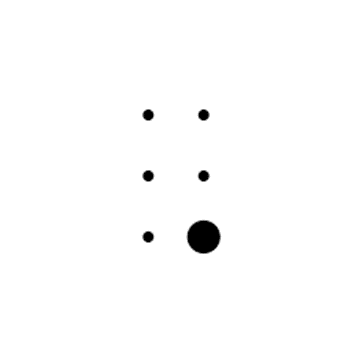
All the Braille letters above are lowercase. To capitalize, a dot 6 is added before the letter.
Punctuation
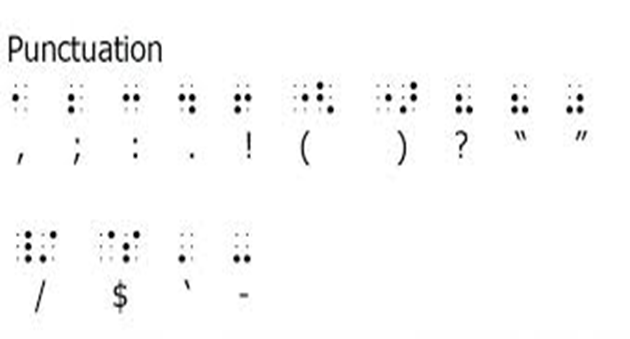
Again, this follows the A-J pattern, but now all the dots move one step down.
Braille Numbers
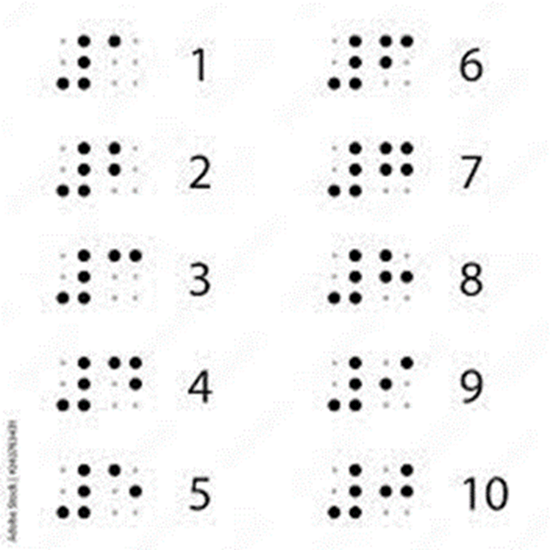
The numbers 1 through 9 and 0 follow the a-j pattern, respectively. However, a character (a numerical sign) is placed in the cell before the letter. The added character appears like a backward L, making it easy to learn Braille numbers.
Braille and Technology
Technology has improved the lives of the visually impaired over the years. Although the pace has been slow, it has increased the variety and accessibility of Braille resources. There are Braille keyboards, refreshable Braille, Braille embossers and printers, and translation software. Also, there are portable electronic Braille devices, just like a PC, and finger readers to identify words on a screen. These are, however, more readily found in developed countries.
Also Read: A Beginner’s Introduction to Blockchain Technology
Braille: Eyes for the Blind
With the right resources, more visually impaired people can learn the Braille alphabet and numbers. It will help close the knowledge gap, enable them to gain employment, and enjoy liberty.
In a time where words rule, everyone and every group should be literate. Let’s increase the Braille literacy pool.


Leave a comment