
Slavery has long been abolished, yet it continues in different forms in our societies. About fifty million people live in modern slavery worldwide.
For financial gains, they are exploited and degraded like the slave trade of old. Acts of the modern-day slave trade include forced migration, debt bondage, and forced labor.
It is the International Day of Remembrance of the Victims of Slavery and the Transatlantic Slave Trade. Let’s see the ways modern-day slave labor exists.
Origin of the Slave Trade
The origin of slavery is difficult to pinpoint. However, it was an old practice, and historical evidence suggests it existed in all ancient civilizations.
Nonetheless, the transatlantic slave trade was the most notorious in history. It took place from the 16th to the 19th centuries, when the European powers forced the migration of 10–12 million Africans to the Americas.
This large-scale enterprise was finally banned in the British Empire in 1807 and 1808 in the US.
10 Elements of Modern-Day Slave Trade
Different modern-day forms of slavery exist across a variety of sectors and occur in almost all countries in the world.
1. Forced Labor
Although often associated with poverty, over half (52%) of all forced labor happens in high-income countries.
Many people work under harsh conditions and have little or no control over their schedules. These workers work long hours, earn low incomes, and have limited rights.
Some, equally, have no say over their living arrangements, and this can break families apart. In addition, they are subjected to abuse, threats, and intimidation to keep them in line.
These instances are common in service industries like agriculture, manufacturing, and construction.
They are also present at many stages of production and distribution in supply chains. In regions where these conditions persist, weak labor laws are mostly responsible.
At other times, it can be subtle, with attractive pay and benefits; 9–5 modern-day slavery. These workers have an unpredictable work schedule and no control over their lives.
It’s why a high-earning executive could take on a lower-paying but less demanding job.
2. Debt Bondage
Also known as bonded labor, this happens when people are trapped in a cycle of debt that they cannot repay. This opens them up to abuse, especially in informal sectors and marginalized communities.
They might have to work in difficult conditions, have restricted freedom, and receive little pay.
Sometimes, victims of fraud fall into debt bonds to repay their losses. In certain instances, people are pressured into labor to repay bloated debts. This can happen to migrant workers who are often taken advantage of by dishonest employers.
Another similar situation is when people, out of a lack of choice, accept unfair contracts with high hiring fees. This can get them into debt, putting them under pressure to work very hard.
3. Human Trafficking
Every year, smugglers engage in human trading globally, moving people across regions and countries. They smuggle them for purposes like sexual exploitation, forced begging, and street trading.
These victims lose their freedom and control because their movement is often restricted. Moreso, they live under constant threat.
It’s easy to fault them, but many of them were lured into these situations, while others were forced into them.
4. Domestic Service
You may have heard of abuse against nannies by their employers on the news. This also happens to housekeepers, cleaners, and other workers who render residential services.
Some of these workers endure physical, emotional, and sexual abuse and have to work long hours. Many earn low wages or don’t get paid at all.
Sometimes, they suffer isolation because of movement restrictions especially when their employers withhold their travel documents.
This makes them unable to leave or travel. Cases like these have surfaced online in the Middle East region.
Also Read: 10 Major Effects of Discrimination
5. Migrant Workers
Migrants and refugees are prone to exploitation because of language barriers and a lack of awareness. They are often also under pressure to assist families back home or repay debts.
All of these puts them in abusive situations, making them vulnerable to maltreatment. As a result, employers may overwork them, especially those who are undocumented.
They make them work outrageous hours, and some are confined to work sites. Out of fear of deportation, many will comply. And if they resist, they are threatened with violence or arrest.
6. Sex Trafficking and Prostitution
Human trafficking is a serious global problem, and no country is free of it. People presume only women are victims of sex trafficking, but men and children are victims as well.
Against their will, they are pushed into prostitution and pornography and denied dignity and freedom.
At first, the traffickers entice them with fake job advertisements or travel opportunities. Then, they control them with ruthless force.
In recent times, internet use has brought about a new kind of modern-day slave trade. Traffickers target innocent children and young adults on the internet for sexual exploitation.
They lurk around on social media, gaming platforms, or dating apps for their victims.
7. Child Labor
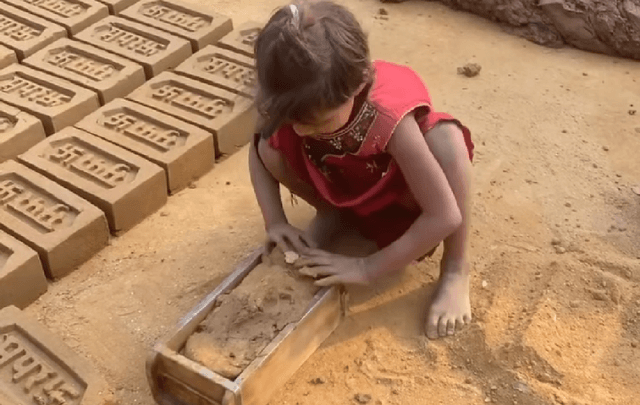
Despite international efforts, millions of underage children still engage in labor. These children work in dangerous conditions with little or no pay (this is beside the point). Child labor is rampant in industries like agriculture and mining.
These children miss out on education, playtime, and childhood. Moreover, they are subject to abuse, especially because they do these jobs because of poverty.
The same applies to children who become child soldiers in certain conflict zones. And then there are others that adults use for petty theft and begging.
In sharp contrast, some child stars sometimes share some of these conditions despite their fame and income.
8. Organ Trafficking
There’s a budding black market for organ trafficking due to the difficulty in getting organ donors and its long list. And to get needed organs, people are tricked or forced into making illegal organ donations.
Afterward, the bulk of the money paid goes to the trafficker or middleman, and the donor gets a small sum.
These donors face serious health risks because of poor post-surgery routines if they exist. They are usually in a powerless situation because of a lack of information or legal resources.
Although organ harvesting is not common in developed countries, black markets still exist. Their easy targets are undocumented immigrants, homeless people, and those in extreme poverty.
They misled them into unethical organ transplants and gave them financial compensation. This is not unusual in places where medical tourism booms.
9. Forced Migration
Every year, millions of people are compelled to leave their homes and communities for lack of choice. They do these due to violence, war, or environmental disasters.
Unfortunately, these movements deprive them of their livelihoods and belongings. Moreso, it makes them unable to control their living conditions, destination, or future outlook.
And so they have to rely on others for survival, which makes them prone to exploitation.
Traffickers, smugglers, and even aid organizations abuse them in many ways: for labor, sexual, or financial purposes.
However, forced migration is a complex issue with many causes, and the experiences of forced migrants are not the same.
10. Forced Marriage
Usually attributed to developing regions and poverty, a quarter of all forced unions are found in upper-income countries.
Victims of forced marriage have no choice in who they can marry, and this is a human rights violation. They may also be subjects of physical, sexual, and emotional abuse—typical examples of a modern slave.
In addition, they are deprived of pursuing their own goals, which further limits their choices.
Break the Chains
The semblance of slavery continues in many countries and industries because of economic gains. The Transatlantic Slave Trade was based on race; the modern-day slave trade affects all races, cultures, and faiths.
It needs to be stopped and it begins with you.


Leave a comment