Is SEO still relevant? Many have asked this question in the last few years. It is still a valid question, especially with the rise of AI and changing search experience.
While SEO is evolving, it still plays a role in increasing your content reach. Gone are the days when SEO only applied to websites; now, SEO can also apply to social media content.
An effective SEO strategy can boost your brand awareness, credibility, and conversion from YouTube, TikTok, and Pinterest to email marketing.
In this article, I will reveal the role of SEO in content creation and why it matters.
Summary
- What is SEO and Why Does It Matter?
- Key SEO Elements in Content Creation
- SEO vs. Non-SEO Content: What’s the Difference?
- Best Practices for SEO-Optimized Content
What is SEO and Why Does It Matter?
Search Engine Optimization (SEO) improves reach on search engines like Google and Binge.
While often associated with websites, SEO increases social media and online content reach.
Learn the basics of SEO in content writing.
SEO Vs. Content marketing
Not to be mistaken for SEO, content marketing focuses on using content to attract and convert audiences into customers.
You can liken content marketing to a vehicle, while SEO is the engine and GPS that takes your content to its destination.
SEO helps you reach your target audience by:
- Using relevant keywords: These are terms that people use when searching for your product or services.
- Quality content: Valuable content that satisfies your audience’s needs and pain points.
With these and more benefits, SEO can make you a trusted authority in your niche.
Check out our Guide on Understanding Different Content Types.
Key SEO Elements in Content Creation
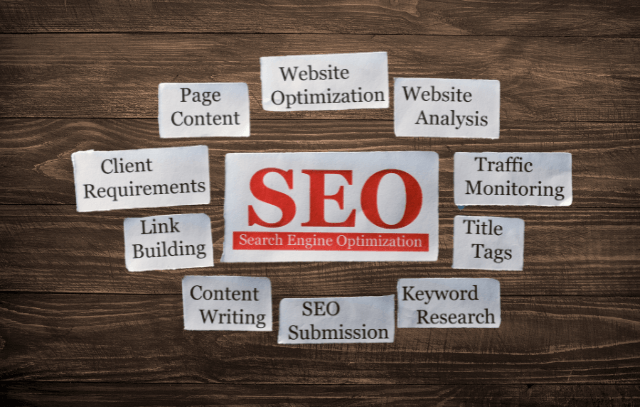
Let’s get into the details of the elements of SEO in content creation.
1. Keyword Research
This involves finding topics and phrases that people use when they make searches online.
You can use tools like Ubbersuggest, Semrush, Ahrefs, Keyword Everywhere, and Google Keyword Planner to find relevant keywords.
Typing on search bars can also reveal popular and valuable keywords.
Related Post: Top Writing Tools for Content Creators
2. Keyword Placement
Keywords help you identify the desires of your potential clients, but placement is just as important.
The right keyword placements enable search engines to understand your content topic. However, avoid keyword stuffing and include keywords naturally in your content.
3. Content Structure
The structure of your content is an essential aspect of SEO. It must be easy to read or follow, and the format should be straightforward.
Your research and crafting time will be wasted if your readers do not make sense of your content.
4. Readability
Using clear, short sentences and paragraphs makes your content easier for people and search engines to understand.
This reduces bounce rates as people will engage with your content longer.
Also, let your content flow in a way that guides your audience through your content without confusion.
Learn about 10 Strategies to Improve Readability.
5. On-Page SEO
This refers to optimizing your content to boost its appearance on search engine results. They include:
- Title tags
Include keywords in your titles and captions, and keep it clear and short (under 60 characters).
- Meta descriptions
This is the summary of your content that shows below your content in search results. It is an avenue to entice viewers to click and see your content.
An ideal length is under 160 characters; including your keywords and call to action improves your reach.
- Headers
Headings give your content structure and improve its readability. They create a clear content order for your audience, search engines, and algorithms.
H1, H2, H3, etc., are commonly used for titles, subtitles in blog posts and articles, and other long-form content.
However, other content also needs a clear structure.
Here’s an on-page SEO example:
Topic: “Best Spas in Central London”
- Title Tag: “Best Spas in Central London – [Your Business Name]”
- Meta Description: “Find out the best spas in Central London. Our guide reveals hidden spots from hotel spas to boutique spas.”
- Headers:
H1: Best Spas in Central London
H2: Best spas in Mayfair
H2: Best spas in Knightsbridge
H2: Best spas in South Bank
These are only examples; your content will determine your headlines, types, and number of headers.
This Might Interest You: Master the Craft of Writing Headlines

6. Internal and External Links
Links are an important ranking factor; you should not ignore building them.
They connect information on the internet and help to build credibility and authority. Links also guide your audience as they navigate content on the web.
- Internal links
These are the links that connect your related web content to one another. They guide your website visitors and search engines in understanding your content and website.
- External links
External links are links you include to your content from other reputable websites. It could be used to cite statistics or other facts that provide more information.
These links show that your website contains verifiable information, and it improves your web credibility.
Also, getting links from other websites (backlinks) passes a vote of confidence in your content.
- Social media links
Apart from the website, you can use social media to drive traffic to your web content. They increase your web content reach and brand awareness.
To build links, consider factors such as anchor text, relevance to linked content, and reputation of linking websites.
7. Image and Video Optimization
Visuals increase your content’s appeal, provide context, and improve engagement. But it offers much more than that and is an integral part of SEO that impacts your content visibility and search engine rankings.
If not optimized, images and videos can harm your SEO strategy. The following will prevent that.
- Compress images and videos without impacting quality to prevent slow site download.
- Use the correct file formats, for example, JPEG or PNG for images and MP4 for videos.
8. Descriptive Metadata
Add keywords to your image file name and use catchy titles, descriptions, and tags with keywords and subtitles for videos.
How SEO Enhances Content Performance
The role of SEO in content creation is clear and compelling. It can lead to
- More visibility on search engines like Google and other platforms.
- An increase in website traffic and engagement across the web.
- Improved audience targeting with the most suitable content.
- Cost-effective long-term organic growth.
SEO vs. Non-SEO Content: What’s the Difference?
You might be wondering how to differentiate SEO content from non-SEO content. Here is how they differ.
| SEO-Optimized Content | Non-SEO-Optimized Content | |
| Keyword-Driven | ✅ | ❌ |
| Structured and Readable content | ✅ | ❌ |
| Optimized Meta Tags and URLs | ✅ | ❌ |
| Mobile & Voice Search Friendly | ✅ | ❌ |
| External and Internal Links | ✅ | ❌ |
| Updates Content | ✅ | ❌ |
An SEO Content is:
- Keyword-Driven
Conduct keyword research and understand the user’s intent behind online searches.
And incorporate the keywords throughout your content (in headings, subheadings, body text, image alt text)
- Well-Structured and Readable
Break down long-form content into digestible sections.
Use short sentences, paragraphs, bullet points, lists, and white space to improve readability.
- Has Optimized Meta Tags and URLs
Use title tags that accurately reflect the content and short, keyword-rich URLs.
- Includes Descriptive Meta Descriptions
Write catchy but honest descriptions that entice.
- Contains Internal and External Links
Link to relevant content within your website and to other reputable sites.
- Mobile and Voice Search Friendly
Readable on all devices, fast loading, and optimized for voice search.
- Regularly Updated
Audit and update old content with current information.
Non-SEO Content could contain high-quality content but lacks all of the above.
SEO Blog Post Vs. Non-SEO Blog Post
Here’s an overview of SEO and non-SEO blog posts.
SEO-Optimized Blog Post
- Title: “How to Reduce Wrinkles: 7 Essential Tips Backed by Science”
- Uses keywords naturally.
- Answers questions that people are searching for.
- Contains internal links to other skincare content.
- The image filename contains keywords and alt text.
Non-Optimized Blog Post
- Title: “Skincare Strategies” (Not specific)
- No keywords targeting search queries.
- The content is not well structured; it is hard to read.
- No links to related content.
- It’s not mobile-friendly.
It’s easy to see why SEO-optimized content gets more reach and engagement and ranks higher on search engines.
Best Practices for SEO-Optimized Content
Whether for articles, newsletters, or other forms of content, these SEO practices are helpful.
- Write high-quality content that provides value
This is the bedrock of SEO. Provide solutions with your content, and your audience will return for more valuable content.
- Use long-tail keywords
They are less difficult to rank for and more specific and sought after.
- Optimize for mobile and voice search
More people begin online searches on mobile devices, making your content and layout accessible to them.
- Keep up with Google’s and other platform’s algorithm updates
Algorithms and rules change often. Stay abreast of changes to update your SEO strategies.
Final Thoughts
The role of SEO in content creation should not be overlooked because quality content is not enough.
Find out what your audience is searching for, create content that answers them, and make it easy for them to find and digest.
Use SEO strategies to give your content the visibility it deserves.
Which of these SEO tips do you apply?


Leave a comment