Does your content focus on what you think is best or what your audience truly wants?
It’s easy to jump into creating content without understanding your target audience’s needs and perspectives.
This can lead to a disconnect, making you create content that doesn’t resonate with them.
As a result, your content may have low engagement, inefficient performance, and poor results.
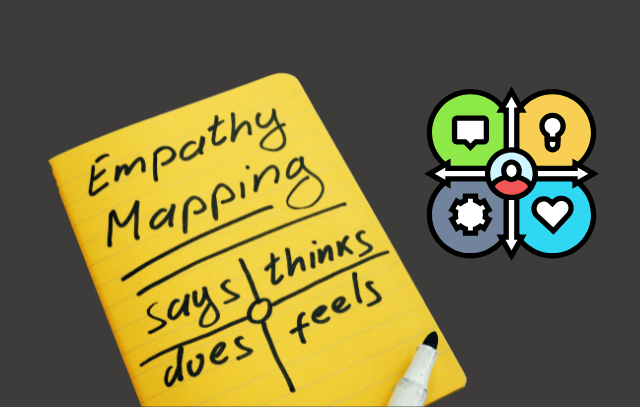
Empathy maps can help you understand your audience’s feelings, pains, thoughts, and needs.
In this post, we will show you empathy map examples and how to create one or more for yourself.
Summary
- What Is an Empathy Map And Why Should You Use One?
- When to Use an Empathy Map
- Core Elements of an Empathy Map
- Multiple Format Empathy Map Examples for Content Creation
- Step-by-Step Way to Create Your Empathy Map
- How to Apply Empathy Maps Across Content Formats
- Conclusion
What Is an Empathy Map And Why Should You Use One?
An empathy map is a visual tool that reveals deep insights into your audience.
Unlike relying on only demographics, they take you into their shoes, showing you what they desire.
It tells you what they think, see, feel, say, and do. This information helps you create content that is relevant and specifically targeted to their needs.
The Benefits of Using Empathy Maps in Content Creation
Using an empathy map for content creation offers the following benefits:
- Gives you a deep understanding of your target audience
- Enable you to create better solutions that suit your audience’s preferences
- Makes your message more precise and highly relevant
- Enhances your content, making it more relatable and engaging
- Eliminates the need for guesswork
- Helps you build a stronger connection with your audience
- Applicable to all content formats.
Overall, empathy maps can guide your content strategy and improve your content performance.
When to Use an Empathy Map
You may wonder if there are specific instances where you should use empathy maps. Here are the times when it’s best to use empathy maps.
• Before the start of new products or services. It makes you understand your target audience’s needs and reactions.
• Before launching new content projects. It ensures your ideas are audience-centric.
• When defining or planning a new content strategy. This will help shape your overall approach.
• When creating your buyer/audience personas. It will reveal much more than demographics.
• If you are struggling with audience engagement. Empathy maps can diagnose disconnects and where you need to focus or refocus.
• When switching to a new audience or refining old content for better performance.
So, when can you use an empathy map? Any time you need a thorough understanding of your audience.
Core Elements of an Empathy Map
Let’s see what a standard empathy map contains.
1. Thoughts
What are your audience thinking? Their hopes, beliefs, fears, and any unspoken words.
2. Feels
What is their emotional state? Are they excited, happy, anxious, worried, or frustrated?
3. See
What content do they consume, and what trends or tools do they follow? Who are the following, and what do they see around them regarding your message?
4. Hear
What do they hear from friends, family, colleagues, news, or influencers?
5. Says
What are they saying or writing about their goals through comments or quotes, for example?
7. Do
What action are they taking by their interactions, behaviors, or habits?
8. Pains
What are their frustration or challenges they encounter that you can solve? Obstacles make great hooks and lead-ins for intros.
9. Gains
What are their expectations? Their desires, aspirations, achievements, and wins help you coin your benefits and value.
All sections of an empathy map contribute to every aspect of content creation, from topic selection and tone to addressing objections, visuals, platform, offers, and CTAs.
Learn more about analyzing your audience for better content.
Multiple Format Empathy Map Examples for Content Creation
Here are platform-specific examples of how insights from an empathy map can be translated into content.

Here’s how you can create multiple content formats that cater to these parents’ interests.
1. Article/ Blog Post Example
• Title: “10 30-Minute Healthy Dinner Recipes for Busy Parents”
• Empathy Bond: Addresses “No time to cook healthy meals,” and endless search for recipes on YouTube, fulfilling the desire for “no guilt.”
• Content: Content should contain meal recipes in ultra-simple steps and possibly downloadable meal plans.
2. Video Content Example
Voiceover: “Are you tired of takeout guilt? You’re not alone. Here are three ultra-fast, healthy dinner hacks for busy parents to change that.”
• Empathy Bond: This video acknowledges their fatigue and guilt, offering quick solutions.
• Content: Visuals that encourage, and a quick breakdown of fast dinner hacks.
3. Email/ Newsletter Example
• Subject Line: “Goodbye Dinner Stress: Your 15-Minute Meal Prep Rescuer is Here! “
• Empathy Bond: Email targets pain points like “stress,” “time,” and the desire for solutions.
• Email Content: Intro validates audience feelings of overwhelm, and body offers simple and time-saving recipes or meal plans.
4. Social Media Post Example
• Images: Exhausted looking parent, meal prep overwhelm, etc.
• Caption: “Parenting is tough enough without the stress of dinner. If ‘What’s for dinner?’ gives you anxiety, these game-changing tips for making healthy meal prep FAST & EASY are for you.
• Empathy Bond: The posts validate their feelings and offer actionable tips in relatable language.
• Content: Could be a series of videos, infographics, or text that provides quick recipes.
As you can see, these examples of empathy maps apply to various platforms and content formats.
Related Post: Guide to Understanding Different Content Types for Better Results
Step-by-Step Way to Create Your Empathy Map

With an understanding of how an empathy map works, follow these steps to create yours.
You’ll need a digital or physical whiteboard or a large piece of paper and pens or markers.
1. Define your Target Audience (Persona)
Identify who your target audience is (hint: it’s not everyone). This is who you are trying to understand.
If you think one person won’t capture your target audience, you can create more than one empathy map. This will help you improve precision.
2. Collect Insights
Gather real information about your target audience through comments, polls, reviews, or DMs.
It’s vital to use your persona’s behavior and actual words and avoid assumptions.
You also need to know the age, occupation, educational level, and other helpful factors.
3. Draw Your Map
It’s time to begin your framework. Draw the head of your persona on your board or paper. You can give your persona a name.
Then divide the space into four parts (top right, top left, bottom right, and bottom left). Label these quadrants: says, thinks, does, and feels.
You can also include sections for gains and pains, and hears and sees.
4. Brainstorm and Fill in the Sections
• Write down every action, thought, and emotion your target audience could be experiencing.
• Says: What they are saying about their problems or even solutions.
• Thinks: What are their hopes, aspirations, beliefs, or unsaid thoughts?
• Does: What actions are they taking? What are their routines, habits, and behaviors? Do they buy specific brands, avoid new items, and prefer thrift? What social media platform do they scroll through for ideas?
• Feels: What emotion are they experiencing? Are they anxious, overwhelmed, happy, frustrated, or relieved?
• Hears: What are they hearing from online or offline?
• Sees: Regarding your service/ product, what do they see in their environments?
5. Identify Pain Points and Gains
From all the information you have gathered, merge the pain points with the gains.
• Pain Points: Take note of their fears, obstacles, problems, or recurring frustrations.
• Gains: What do they desire, what are their hopes, or measures of success? What solutions are they looking for?
Look for patterns in their pains and gains and group similar ideas and contradictions. Don’t be surprised to find unexpected insights.
6. Use Your Map

This is a crucial step where you put into practice all you have gathered.
Brainstorm Content Ideas
Think critically about the content you can create to solve their problems and their needs.
It should be based on their pains and gains, with the ability to tap into their desires.
Refine Your Message
Tailor your words to speak directly to what they say and think.
Choose Content Formats
Consider the format (email, video, blog post, social media ) that will best deliver your message.
It has to reach them through what they see (read, listen, or watch) and do (take action).
However, we encourage content repurposing to maximize your reach.
Test and Repeat
Your map is not set in stone; it’s like a living document. Update it as you learn more about your audience.
How to Apply Empathy Maps Across Content Formats
We are not done yet. Mapping your empathy map is only the first step.
The magic is in translating the information into content creation.
Here’s how to apply your acquired insights across different content formats.
1. Blog Posts / Articles
• Adjust headings and introductions to reflect what your audience says or thinks. You can also use their “pain points” as a hook.
For example, if they “think” that meal prep is overwhelming, you can say, “Overwhelmed by Meal Prep? …”
• Directly address pains with dedicated sections. This allows you to provide clear solutions or answers to problems on the map.
• Show gains by illustrating how your solutions can lead to their desires. You can use success stories or hypothetical scenarios to drive home your points.
• Speak your audience’s language by using phrases and vocabulary they say or think.
2. Social Media
• Use relatable hooks like a question or statement that reflects what they think or say. (“Do you feel completely drained by dinner prepping?”).
• Choose images or graphics that align with how they feel or portray their “does” (e.g., a messy kitchen and a tidy fridge for overwhelm and gain).
• Make your sales message short and punchy. Offer immediate value or quickly address a “pain”.
• Encourage them to speak by asking questions in your content. Invite them to share what they think and how they feel in the comments.
This will let you know what they are saying, providing you with more accurate insights.
• Address what they hear and see. If they often “see” false expectations, provide a real-life perspective.
Don’t miss our detailed guide for writing for different social media platforms.
3. Videos
• Use visuals to show. If they feel frustrated, let your video show how your solution transforms, putting an end to similar frustration.
• Employ emotional connection. Use facial expressions, music, or tone that resonate with how they feel. For instance, a calming and reassuring tone easily gains the trust of the overwhelmed.
• Include actionable “does” that clearly demonstrate the steps towards the solution. Clear, concise tips keep the audience engaged, especially with fast scrolling and shorter attention spans.
• Tackle what they hear and see. If they hear wrong advice, mention it in your video and refute with the correct information.
4. Email Newsletters
• Craft subject lines that instantly address a “pain” or assure a “gain.” For example, “Tired of Content Chaos? (This Easy Fix Will Help!)”
• Write in a conversational tone, like you are speaking directly to someone. Use terms that recognize what they think or feel.
• Offer direct solutions by getting straight to your points. Avoid fluff and deliver their desired gains succinctly.
• Make your calls to action (CTAs) clear. Guides them to act (Do) that helps them achieve gains or resolve their pains. (e.g., Click to get your quick healthy meal plans)
Also Read: Effective Content Distribution Strategies You Need to Know
Build Content with Your Audience
Empathy maps help you create content from the eyes of your audience. It eliminates guesses, provides real solutions, and builds connections.
Use our empathy map examples to create yours and improve your next batch of content.
Start today by mapping out what your audience persona is saying, seeing, thinking, and doing.
Don’t just create content for your audience, build it with them.


Leave a comment